





: 이타미 준과 유이화의 바람이 남긴 호흡
Architecture of the Wind
: Traces of Breath 2025.12.06 – 2026.01.22
-
전시 주최 및 주관
페즈 FEZH
이타미준건축문화재단
ITAMI JUN Architecture & Culture Foundation
유동룡미술관 ITAMI JUN MUSEUM -
참여 작가
이타미 준 ITAMI JUN
유이화 YOO EHWA -
전시 장소
페즈 FEZH (서울 용산구 대사관로11길 41)
-
전시 부문
드로잉, 사진, 스케치, 건축모형, 회화, 가구 등


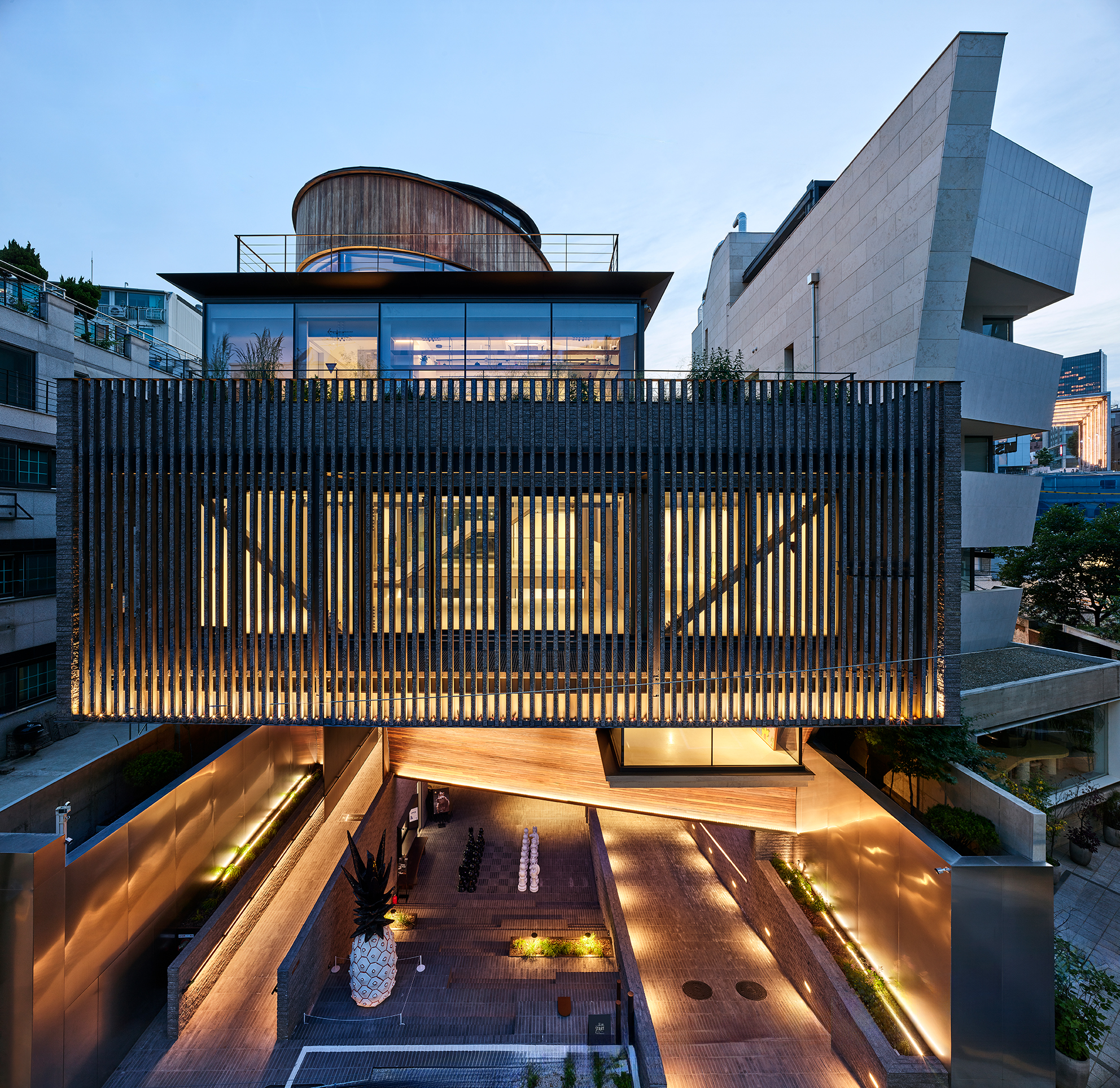
서울, 그 중심에 자리잡은 [FEZH]는 복잡한 도심 속에서 자연과 인간의 순수한 온기와 호흡을 통해 모두의 회복을 향하는 공간으로 설계되었습니다.
건축가 유이화는 설계의 과정에서 건축가 이타미 준의 철학을 기반으로
‘그 땅에 살아왔고, 살고 있고, 살아갈’ 생명의 소리에 귀 기울이며 그 건축 세계를 이어갑니다.
[FEZH]의 작업에 이르기까지 유이화가 열매 맺은 건축의 뿌리를 따라 이타미 준의 건축으로 이어진 이야기,
<바람의 건축 : 이타미 준과 유이화의 바람이 남긴 호흡> 전시를 진행합니다.
이번 전시는 2020년대 현재, 건축가 유이화의 작품부터 1970년대 건축가 이타미 준의 데뷔작까지 시간을 거슬러 올라갑니다.
시간을 넘어 이타미 준의 철학으로 연결된 건축 작품, 총 29점을 건축 모형, 드로잉, 스케치, 영상, 회화를 중심으로 네 개의 테마로 구성하였습니다.
첫 번째 테마에서는 이번 전시 공간인 [FEZH]를 포함한 건축가 유이화의 네 점의 대표 작품을, 두 번째 테마에서는 아버지 이타미 준과 딸 유이화가 건축가로서 함께 호흡을 맞췄던 2000년대 작품들을 소개합니다.
세 번째 테마에서는 이타미 준 작업의 초중기에 해당하는 시기로, 그의 오리지널리티의 세계를 담은 70-90년대의 대표작들을,
마지막 네 번째 테마에서는 [FEZH]의 시그니처 공간, 까사 델 아구아에서 자연을 수집한 작업 [수풍석 미술관]으로 펼친 명상의 공간을 만나보실 수 있습니다.
매개체로서의 건축을 강조하며 그 땅의 소리와 인간의 온기를 담고자 했던 두 건축가의 일관된 철학과 작품 세계를 통해,
그들이 건축으로 전하고자 했던 이야기를 만나보시기 바랍니다.
더 나아가 두 건축가 그리고 여러분과의 만남의 순간이 이 공간에서 함께 호흡하며, 건축이 관계 맺은 땅과 우리의 삶의 모습을 함께 그려보는 시간이 될 수 있기를 희망합니다.
Situated in the heart of Seoul, FEZH is designed as a space where nature and human warmth converge,
offering a place for restoration amidst the bustling city.
During the design process, architect Yoo Ehwa drew upon the philosophy of Itami Jun,
listening closely to the sounds of life that have lived, are living, and will continue to live on the land, continuing his architectural vision.
Following the roots of architecture cultivated by Yoo Ehwa and tracing the legacy of Itami Jun, this exhibition,
Architecture of the Wind: Traces of Breath by Itami Jun and Yoo Ehwa, unfolds their intertwined story.
The exhibition spans from the present works of Yoo Ehwa in the 2020s back to the debut works of Itami Jun in the 1970s.
A total of 29 architectural works—models, drawings, sketches, videos, and paintings—are presented across four thematic sections, all connected by the philosophy of Itami Jun.
The first theme features four representative works by Yoo Ehwa, including the exhibition space FEZH.
The second theme showcases works from the 2000s, where father Itami Jun and daughter Yoo Ehwa collaborated closely.
The third theme focuses on Itami Jun’s early to mid-career works from the 1970s to 1990s, reflecting his unique originality.
The final theme highlights the meditative space at Casa del Agua in FEZH, presenting The Three Art Museum as a work collecting and responding to nature.
Through the consistent philosophy and body of work of these two architects,
who emphasized architecture as a medium to capture the sounds of the land and human warmth,
visitors are invited to experience the stories conveyed through their architecture.
Beyond this, the exhibition aims to create a shared breath between the two architects and the audience,
reflecting how architecture relates to the land and our lives.
[Theme 1]
2020 : 건축가 유이화
첫 번째 테마에서는 건축가 유이화의 대표작으로 전시를 시작합니다. 아버지이자 선배 건축가인 이타미 준의 건축 철학을 뿌리로,
자신만의 정체성을 담아 열매맺은 네 개의 대표 작업을 소개합니다.
제주의 ‘바람’을 의식하며 아버지의 삶의 이야기를 공간에 담아내고자 했던 [유동룡미술관]부터, 이번 전시의 공간이 된 서울의 도심 속 오아시스 [FEZH]까지 만나보시기 바랍니다.
[Theme 2]
2000 : 건축가 이타미 준 그리고 유이화
두 번째 테마에서는 건축가 이타미 준이 딸이자 후배 건축가인 유이화와 함께 호흡을 맞췄던 2000년대의 작업들로 거슬러 올라갑니다.
[수풍석 미술관], [방주교회] 등 이타미 준의 대표작뿐만 아니라 [오보에힐스], [경주 엑스포 공모전] 등 국내 다양한 지역에 자리잡은 작업들을 소개합니다.
말년의 시기까지 일관되게 자신의 철학을 관철하며 순수한 오리지널리티를 추구했던 이타미 준,
그와 호흡을 맞추며 건축가로서의 태도와 그 철학을 이어받은 유이화,
두 건축가가 만나 꽃을 피울 수 있었던 이타미 준의 2000년대 대표작들을 만나보시기 바랍니다.
[Theme 3]
1990 - 1970 : 건축가 이타미 준
세 번째 테마에서는 이타미 준의 초중기 작업에 해당하는 90년대부터 70년대 대뷔작까지의 시기를 전개합니다.
모노하 예술가들과 가깝게 교류하며, 소비와 기능으로만 점철된 현대건축에 본질과 예술성을 질문했던 이타미 준은 시대에 필요한 메세지를 건축으로 답했습니다.
그가 사랑했던 제주의 자연을 만나 건축이 매개하는 세계를 만들고자 했던 90년대 제주 프로젝트의 시작과,
자연의 야성미와 인간의 온기로 건축의 본질을 담아냈던 80년대,
자신만의 먹의 세계를 추구하며 실험적인 작업들을 선보였던 70년대까지의 흐름을 따라 이야기를 이어갑니다.
[Theme 4]
시간을 넘어 : 바람의 건축
마지막 테마에서는 끊임없이 변화하는 자연 그 자체를 현상으로서 수집했던 건축, [수풍석 미술관]의 영상 작업을 [FEZH]의 명상 공간 ‘까사 델 아구아’에서 펼칩니다.
건축이 자리잡을 지역의 환경과 문맥을 의식하며, 자연과 조응하는 건축은 시간을 초월하는 힘을 보여줍니다.
이타미 준이 [수풍석 미술관]에 담고자했던 이야기와 초월한 시간을 만나보시기 바랍니다.
[Theme 1]
2020: Architect Yoo Ehwa
The first theme introduces four representative works by Yoo Ehwa, rooted in the architectural philosophy of her father and mentor, Itami Jun,
while expressing her own identity.
From the ITAMI JUN Museum in Jeju, designed with the consciousness of the island’s “wind” and her father’s life story,
to FEZH, an oasis in the heart of Seoul that houses this exhibition, visitors can explore the fruits of her architectural journey.
These works reflect how Yoo Ehwa absorbed Itami Jun’s principles while cultivating her own architectural voice,
demonstrating a sensitivity to the natural environment, the stories of the land, and the human experience within space.
[Theme 2]
2000: Architect Itami Jun and Yoo Ehwa
The second theme focuses on works from the 2000s, where Itami Jun and his daughter Yoo Ehwa collaborated.
It features Itami Jun’s key projects such as The Three Art Museum and Church of the Sky,
as well as works in various Korean regions, including Oboe Hills and the Gyeongju Expo Competition.
This theme highlights how Itami Jun, upholding his philosophy and pursuing pure originality until his final years,
and Yoo Ehwa, inheriting his architectural approach and vision, coalesced to create notable works in the 2000s.
[Theme 3]
1990–1970: Architect Itami Jun
The third theme presents Itami Jun’s early to mid-career works, spanning from the 1990s back to his debut in the 1970s.
Interacting closely with Monoha artists, he questioned the essence and artistry of modern architecture dominated by consumption and function,
answering the needs of his time through architecture.
Visitors follow the narrative from his 1990s projects in Jeju, which sought to create a world mediated by architecture while embracing nature,
to his 1980s works, capturing the essence of architecture through the raw beauty of nature and human warmth,
and finally to his experimental ink-based works in the 1970s.
[Theme 4]
Beyond Time: Architecture of the Wind
The final theme presents The Three Art Museum through video works displayed in FEZH’s meditative space, Casa del Agua.
By responding to the environment and context of the site, architecture that resonates with nature demonstrates a timeless power.
Visitors are invited to experience the narrative and transcendent time embedded in Itami Jun’s work at The Three Art Museum,
capturing the essence of his architectural philosophy.


유동룡미술관 ITAMI JUN MUSEUM
63017 제주특별자치도 제주시 한림읍 용금로 906-10 (월림리)E-mail: info@itamijunmuseum.com
© ITAMI JUN MUSEUM. All rights reserved.


